
















How Otto transcribes a property inspection dictation
Otto uses audio dictation to let surveyors record observations on site, then converts speech to structured RICS report content via Whisper. Here is how that pipeline works.

One of the earliest features we built into Otto was audio dictation. Surveyors already narrate their observations while they work, either to themselves or into a voice recorder. We wanted to capture that natural flow and turn it into structured report content, rather than asking surveyors to change how they inspect.
Here is how the pipeline works.
Recording on site
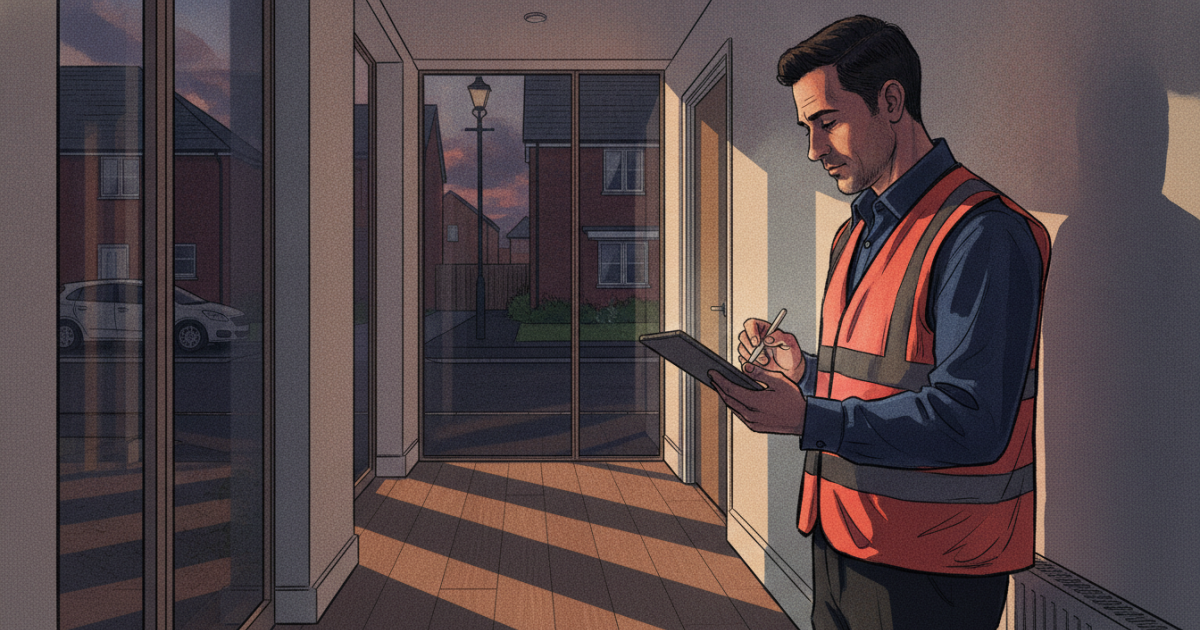
The surveyor opens Otto on a phone or laptop and starts a dictation session for the property they are inspecting. They can begin recording at any point: before they enter, room by room as they go, or in the car immediately after. Otto does not require a particular order.
Speech is captured as audio and queued for transcription. The recording can be paused and resumed. If signal is poor, Otto queues the audio and processes it once connectivity returns.
Transcription via Whisper
Once a segment is uploaded, Otto sends it to Whisper, OpenAI's speech-to-text model. Whisper was chosen because it handles real-world audio well: background noise, accents, property-specific vocabulary, and the abbreviated shorthand that experienced surveyors use when dictating ("clear visible crack, north-facing gable, runs from DPC to first floor sill" rather than a full sentence).
The raw transcript comes back as text and is stored against the inspection record.
Structuring the output
Raw transcription alone is not enough. A five-minute dictation recorded while walking through a property arrives as a continuous stream. Otto applies a structuring pass that maps the transcript to the RICS element categories used in Level 2 HomeBuyer Reports and Level 3 Building Surveys: roof, chimneys, walls, floors, ceilings, windows, doors, internal services, and so on.
This mapping is not rigid. The surveyor can move content between sections, merge observations, or discard anything that was captured by accident. The structured output is a starting point, not a locked document. It sits alongside the same auto-mode pipeline that now routes AI content into every report section: see Otto v2, the auto-mode RICS report writer, levelled up.
What the surveyor does next
After the structuring pass, the surveyor sees a draft broken into report sections. Each section contains the AI-suggested text drawn from the dictation. At this point the surveyor is editing, not starting from scratch.
They review each section, correct any transcription errors, adjust phrasing, add anything they did not dictate, and, critically, confirm or set each condition rating. Otto never assigns a condition rating automatically. The surveyor's rating is always the final word: see the rating fidelity problem, how we guarantee AI never alters a condition rating.
Where dictation fits in the wider workflow
Dictation is one input into Otto alongside photographs. A surveyor might dictate their structural observations and rely on Otto's image analysis to catch visible surface defects they photographed but did not narrate in detail: see how Otto reads condition from a property photograph. The two streams are combined in the draft and the surveyor reconciles them in the editing pass.
The goal is to get the surveyor to a reviewable draft as quickly as possible, so they are spending their time making professional judgements rather than typing from notes.
A note on accuracy
No speech-to-text system is perfect. Whisper performs well on surveying vocabulary in our testing, but errors do occur, particularly with proper nouns (street names, building material brands) and in very noisy environments. The structured output should always be reviewed carefully. Otto is a drafting tool; the surveyor remains responsible for every word in the final report.
Learn more about Otto at RICS surveyors on Home.
Thinking about your next move?
See what your home's worth in seconds, with the UK's longest-running property data behind it.
Get an instant valuation