

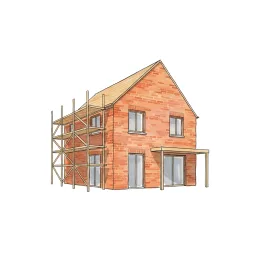




















We acquired a 30-year-old portal and rebuilt it from scratch. Here is why.
When Homemove acquired home.co.uk in November 2025, they chose to rebuild the platform rather than inherit the old stack. Here is the reasoning.

When a company acquires a thirty-year-old web platform, the instinct is usually to preserve the working parts and patch the rest. We took a different view.
What we inherited
Home.co.uk's value was in its data and its reputation for independence. Those things are real and they survive a rebuild. What we did not want to carry forward was a codebase built on the assumptions of 2010, extended and patched to 2025, with layers of accumulated technical debt making every change slower and riskier than it should be.
A portal in 2025 needs to do things a 1995 site was never designed for: real-time CRM sync from 18 different providers, AI-powered valuation, a multi-tool LLM assistant, PostGIS-powered spatial search, an integrated moving services marketplace. Bolting those capabilities onto old infrastructure is possible. It is also slow and fragile.
We had already built most of these capabilities in the Homemove platform before the acquisition. The question was not "can we build this?" It was "where does it live?"
The decision
We chose to rebuild on the Atlas platform: Laravel 11, Vue 3, Inertia, PostGIS, Elasticsearch. The same stack Homemove had been building on, extended to host the consumer portal, the agent tools, the surveyor platform and the data products under one roof.
That meant the relaunch of home.co.uk in late 2025 ran on entirely new infrastructure. The domain and the data came from the old platform. The product underneath did not.
What that unlocked
Rebuilding rather than patching meant we could ship features that would have been months of groundwork on legacy infrastructure.
The 18 CRM integrations launched within weeks of the acquisition because the adapter framework was already there. Otto, the AI surveyor tool, moved from a standalone product into the main platform cleanly. The agent dashboard, the AI valuation engine, the Inigo assistant: all of these sat in a codebase built for them, not retrofitted around them.
The rebuild also meant the data integrity we cared about was structural. The house price analytics, the stock and supply figures, the time-on-market data: these run off the same data layer as the listings, not a separate system updated on a different schedule. Home now tracks 1,249,531 live UK property listings on that single layer, combining sale and rental stock, including roughly 45,623 new-build listings.
The cost
Rebuilding is expensive. It takes longer than patching. The visible product that users see on day one of a rebuild often looks similar to what was there before: the work is in the foundation, not the facade. That can be hard to explain to people who are watching the release calendar.
The alternative was a platform that would need rebuilding in two years anyway, with more users on it and more integrations depending on the old structure. We made the call early.
The Atlas platform (the codebase underlying home.co.uk) has been under development since 2025. The first commits were in January 2025; the monorepo consolidation happened in October 2025 ahead of the acquisition announcement.
Thinking about your next move?
See what your home's worth in seconds, with the UK's longest-running property data behind it.
Get an instant valuation