 Buy
 Rent
 Sell
 New
 Prices






Gazumping: what it is and how to avoid it
Gazumping is when a seller accepts your offer, then takes a higher one. In England and Wales it can happen until contracts are exchanged. What to do if the agent is still doing viewings, how to protect yourself, and what our listing data shows.
In this article
Published 17 November 2026.
Gazumping is when a seller accepts your offer on a home, then accepts a higher offer from someone else. In England and Wales it can happen at any point until contracts are exchanged, because an accepted offer isn't legally binding until then.
It's legal, and you can't rule it out completely. But you can make it less likely, and estate agents have rules about how they handle other offers. Here's what to do.
Offer accepted, but the agent is still doing viewings?
This is allowed. The seller decides whether to keep marketing the home after accepting your offer. But if the agent is registered with The Property Ombudsman, its code of practice says they must tell you in writing if the home is still being marketed, or if it goes back on the market later (section 9e).
What to do:
- Ask the agent, in writing, whether the seller has agreed to take the home off the market and stop viewings.
- If not, ask why, and whether any other offers have come in.
- Tell your solicitor, and ask whether a lock-out agreement (see below) is worth it.
What gazumping means
The government's study of reservation agreements defines gazumping as "a situation where the seller initially accepts an offer on a property and then reneges on it after receiving a subsequent higher offer".
The reverse is gazundering: the buyer cuts their offer late in the sale, often just before exchange, knowing the seller may not want to start again.
Both are possible for the same reason. As GOV.UK puts it, "an offer is not legally binding in England and Wales until you exchange contracts". Exchange is when the buyer and seller swap signed contracts. After that, the sale is legally binding on both sides. Before it, the home is usually marked sold STC, and either side can still walk away.
Is gazumping legal?
Yes, in England and Wales. A seller who accepts a higher offer before exchange isn't breaking the law, and a buyer can pull out before exchange without penalty, unless they've signed something that says otherwise.
Estate agents have rules to follow, though. By law (Schedule 3 of the Estate Agents (Undesirable Practices) (No. 2) Order 1991), an agent must pass on every offer to the seller "promptly and in writing", unless the seller has said in writing that they don't want offers of that kind.
Agents registered with The Property Ombudsman must also follow its code. Under it, the agent must:
- tell the seller about all offers received "until contracts have been exchanged" (section 9a)
- tell you in writing if the seller keeps marketing the home after accepting your offer, or puts it back on the market (9e)
- tell you promptly if the seller accepts another offer (9h)
- never invent or misrepresent another offer (9i)
So the agent can't keep a higher offer from the seller, but they can't pretend there is one to push your price up either.
When gazumping can happen
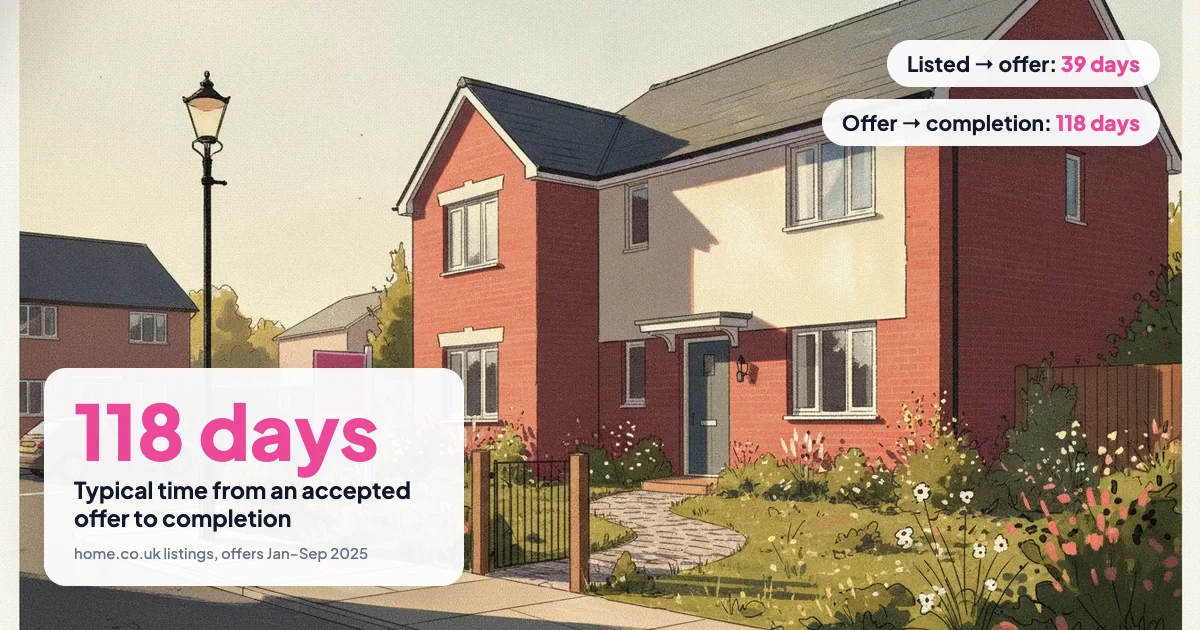
The window runs from the day your offer is accepted until exchange. On home.co.uk, the typical home that completed took 118 days from accepted offer to completion, from our analysis of 53,162 sales agreed in 2025. Exchange comes before completion, so the window is somewhat shorter than that. Completion is the day the money changes hands and you get the keys; searches are the checks your solicitor runs with the council and others.
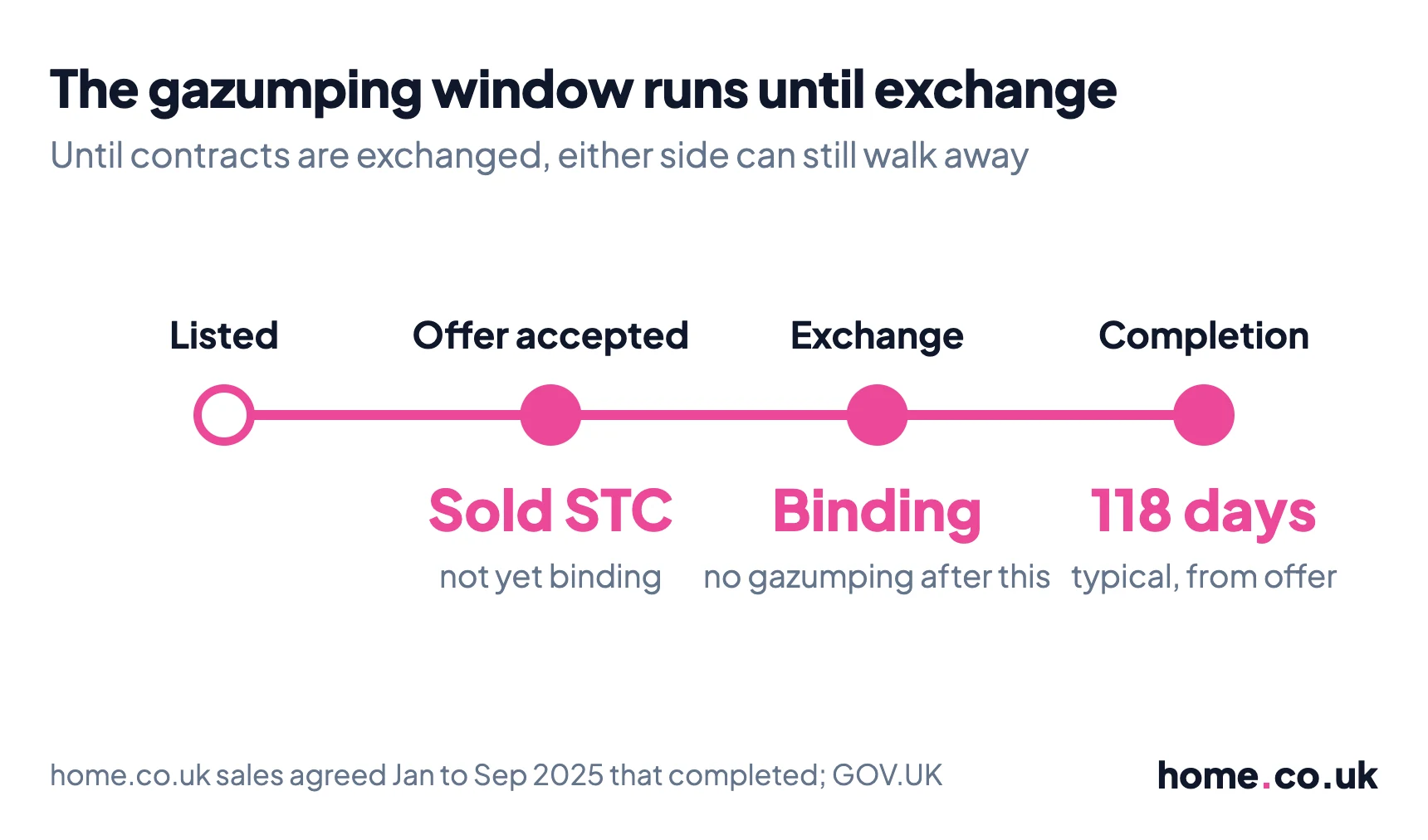
The longer a sale takes, the longer the window stays open. Chains, slow searches and mortgage delays all add to it.
How to avoid being gazumped
- Ask for the home to come off the market. Once your offer is accepted, ask the agent to confirm in writing whether the seller will take the home off the market and stop viewings. They must still pass on any offers that come in.
- Ask for a lock-out agreement. This is a written agreement in which the seller agrees not to deal with other buyers for a set period while you arrange your survey, mortgage and searches. Your solicitor can draft one. It doesn't force the sale, but if the seller deals with another buyer during that time, they break the agreement.
- Ask about a reservation agreement. Here, buyer and seller both commit to the sale, often with a deposit paid by one or both sides. They're voluntary, and the government is encouraging their use.
- Be ready to move quickly. Line up your mortgage agreement in principle (a lender's note of how much it would likely lend you), solicitor and survey before you offer, so the time to exchange is as short as possible.
- Know the chain. Ask whether the seller has found somewhere to buy, and how many sales depend on each other. A long chain means more time before exchange.
- Offer a fair price. Look up what similar homes nearby have sold for. An offer close to the market price gives the seller less reason to wait for a higher one. Our house prices pages show the average for each area, for example Manchester or Leeds.
- Keep in touch. Reply quickly to your solicitor and the agent, and ask for regular updates.
If you've been gazumped
You have no automatic right to get back what you've spent, such as survey, mortgage and legal fees. What you can do:
- Ask the agent to confirm the other offer in writing. Under The Property Ombudsman's code, if your agent is registered, they can't invent or misrepresent one (9i).
- Decide your walk-away price before you think about matching it.
- Ask your solicitor to pause any work you haven't yet paid for.
What our data shows
We can't measure gazumping directly, because we see listings and their asking prices, not the offers made. The closest signal is a sale agreed whose asking price then goes up.
We followed 469,311 listings for sale on home.co.uk that went under offer or sold STC between 1 March and 18 July 2026, for four months afterwards. Only 189 (about 1 in 2,500) had a change in that time that left the asking price higher than when the sale was agreed. Most gazumping won't show up in this, because a seller who switches to a buyer who was already interested doesn't need to change the listing.
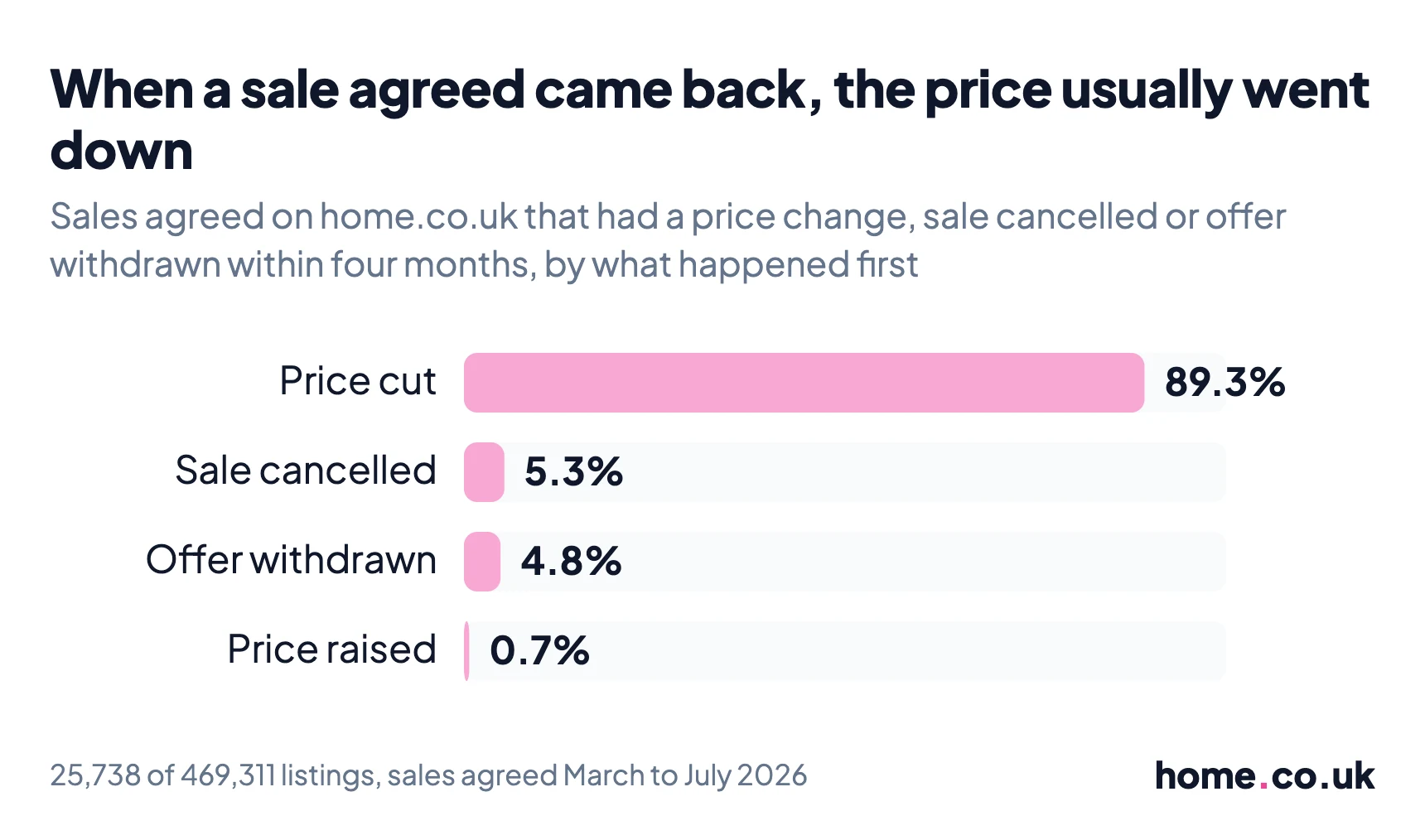
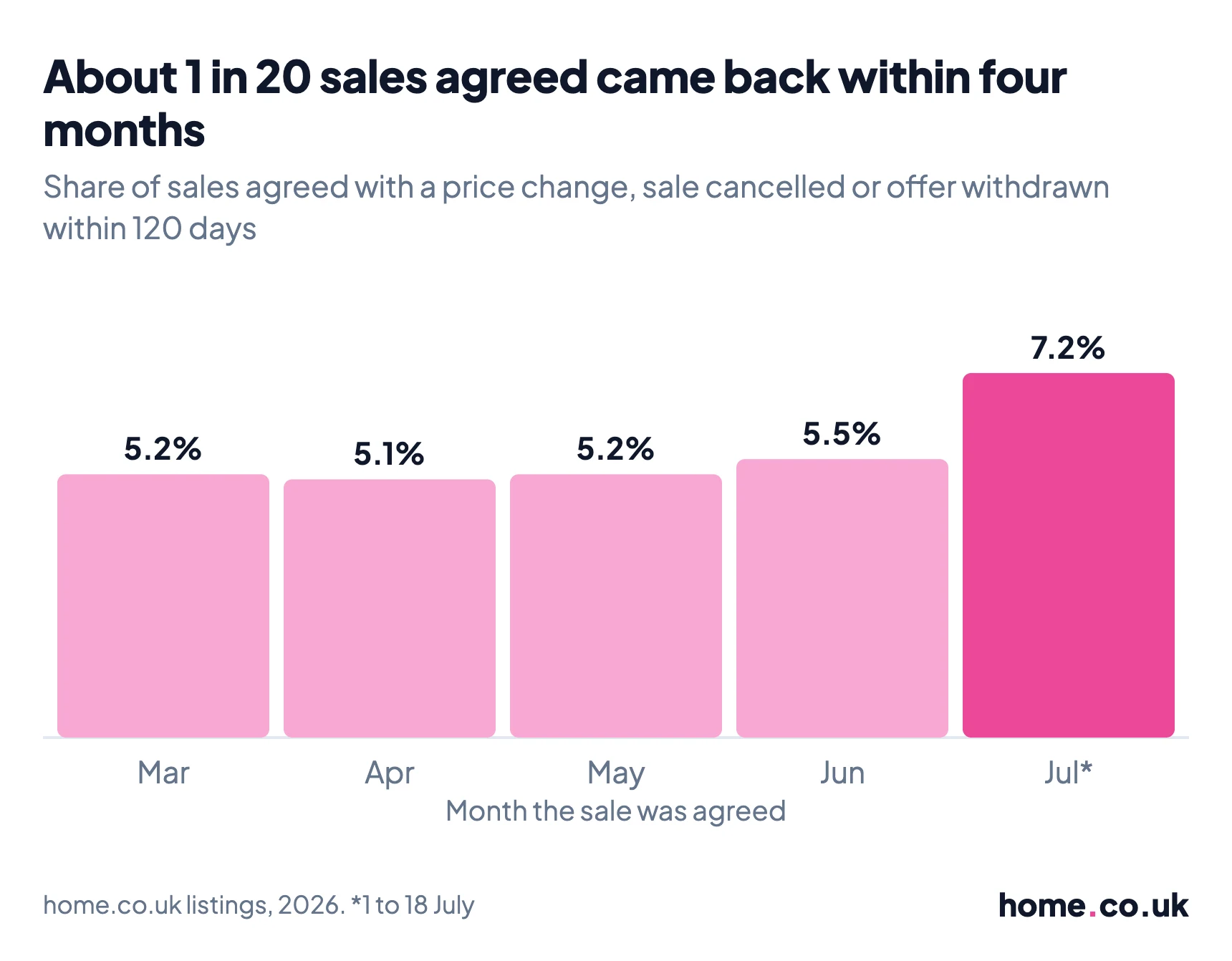
What we see far more often is the price going down. Within four months, 25,738 of those listings (5.5%, about 1 in 20) had a price change, a sale cancelled or an offer withdrawn. In 89% of those cases the first change was a price cut. A price cut first was more than 100 times as common as a price rise first. A price cut can follow a renegotiation or a sale that fell through; we can't tell which from the listing.
The share was about 5% for sales agreed in each month from March to June, and 7.2% for sales agreed in the first half of July.
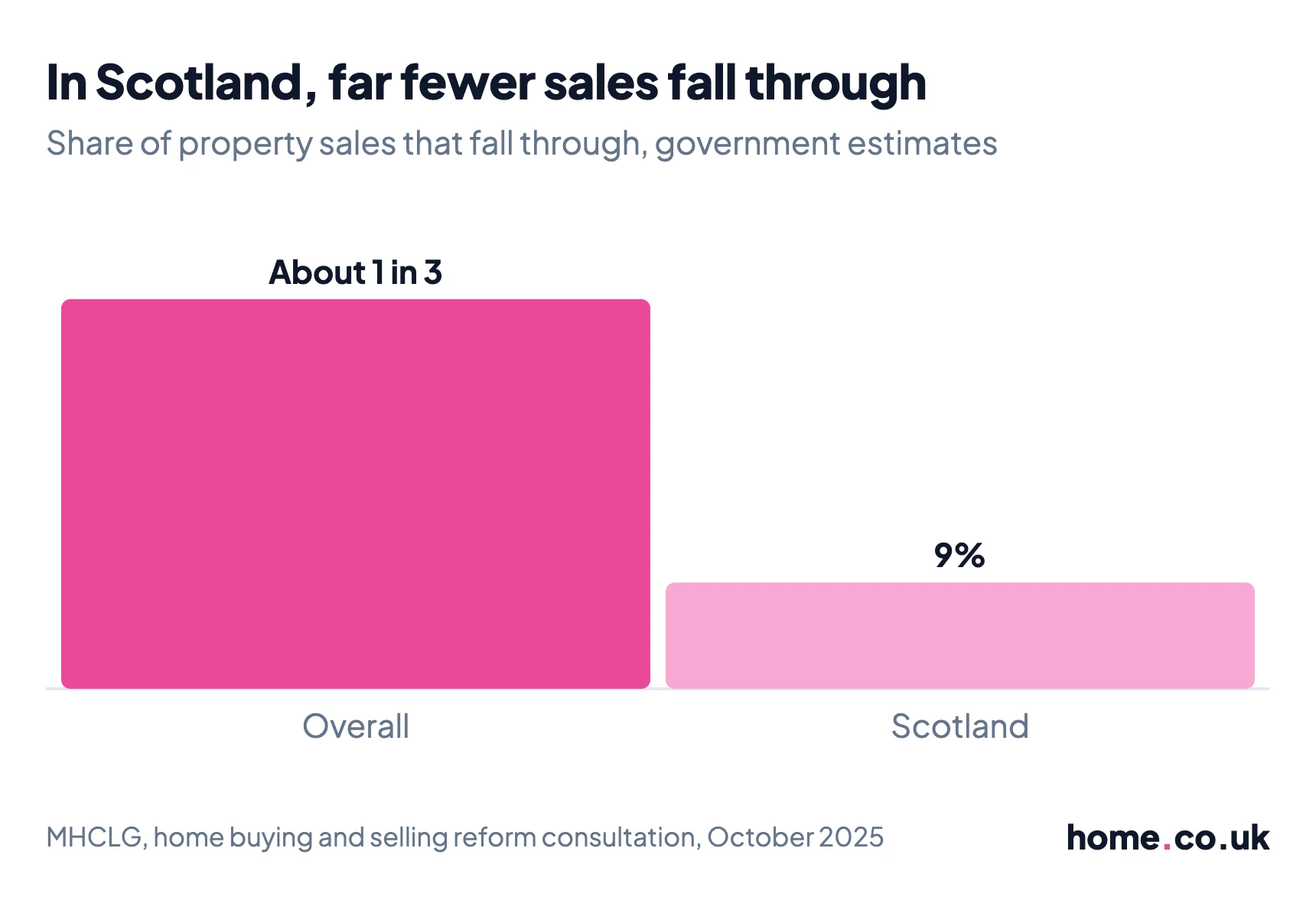
The real share of sales that fall through is likely to be much higher, because a sale that collapses and is relisted as a new listing, or with another agent, doesn't show up here. The government's 2025 consultation says "around 1 in 3 transactions fail". Gazumping is one reason among many, alongside chains breaking, survey problems and mortgages falling through.
In Scotland it's different
In Scotland, a sale becomes binding much earlier. According to mygov.scot, "once the missives are accepted and both you and the seller agree on the terms, you have a binding contract". Missives are the formal letters between the buyer's and seller's solicitors. When several people are interested, the seller usually sets a closing date for offers.
The government's consultation says that "more binding transactions in Scotland are part of the reason that only 9% of their transactions fall through".
Is the law changing?
Not yet. In June 2026 the government published a roadmap after its consultation. It says it intends "to introduce legislation to require the use of binding conditional contracts in property transactions", but only "after sales packs are embedded", by the end of this Parliament. For now, it says it will "spread awareness of the voluntary use of reservation agreements".
None of these changes are law yet, and the government says it doesn't expect them to apply in Scotland.
If you're selling
The quickest route to exchange is a buyer who is ready to proceed, and accepting a higher offer late on can mean starting again with a new buyer. A realistic price from the start also means you're less tempted to reopen the deal. Our guide to negotiating offers covers how to weigh up competing buyers, and selling your home covers the rest of the process. To see what your home is worth now, get a free valuation from a local agent. home.co.uk is a property portal and works with the agents who offer these valuations.
How we worked this out
We took listings for sale on home.co.uk (not lettings) that first went under offer or sold STC between 1 March and 18 July 2026: 469,311 listings. For each one we looked for the first price cut, price rise, sale cancelled or offer withdrawn on the same listing in the 120 days that followed, and compared the asking price then with the asking price when the sale was agreed. We pulled the data in half-week blocks and grouped them into months by each block's start date, so a month can be a few days out at either end. About half (54%) of the listings that changed had a sale agreed again within four months.
We start in March 2026 because the way our listing history was recorded changed in early 2026, so earlier figures aren't comparable. These are listings, so a home listed by two agents counts twice. We see asking prices, not the offers made or the price finally agreed.
The 118 days from offer to completion is from our sold STC analysis of 53,162 homes that went under offer between January and September 2025 and completed. Typical figures are medians.
This post was written by Sam Dooley, who works in marketing at home.co.uk, using home.co.uk's own listing data and the official sources linked above. It's general information, not legal advice; your solicitor can advise on your sale.
More in Selling your home: the Home guide
Frequently asked questions
What is gazumping?
Gazumping is when a seller accepts your offer on a home, then accepts a higher offer from someone else before contracts are exchanged.
Is gazumping illegal?
No, not in England and Wales. An accepted offer isn't legally binding until contracts are exchanged. Estate agents must pass every offer on to the seller, and agents registered with The Property Ombudsman must tell you if the seller accepts another one.
Can an agent keep doing viewings after my offer is accepted?
Yes, if the seller wants them to. Agents registered with The Property Ombudsman must tell you in writing if the home is still being marketed. You can ask for it to come off the market, or for a lock-out agreement.
Can you be gazumped after exchange?
No. Once contracts are exchanged, the sale is legally binding on both sides.
Does gazumping happen in Scotland?
It can, but only until the missives are concluded, which is usually much earlier in the process than exchange in England and Wales.
What is gazundering?
Gazundering is the reverse of gazumping: the buyer lowers their offer late in the sale, often just before exchange.
How common is gazumping?
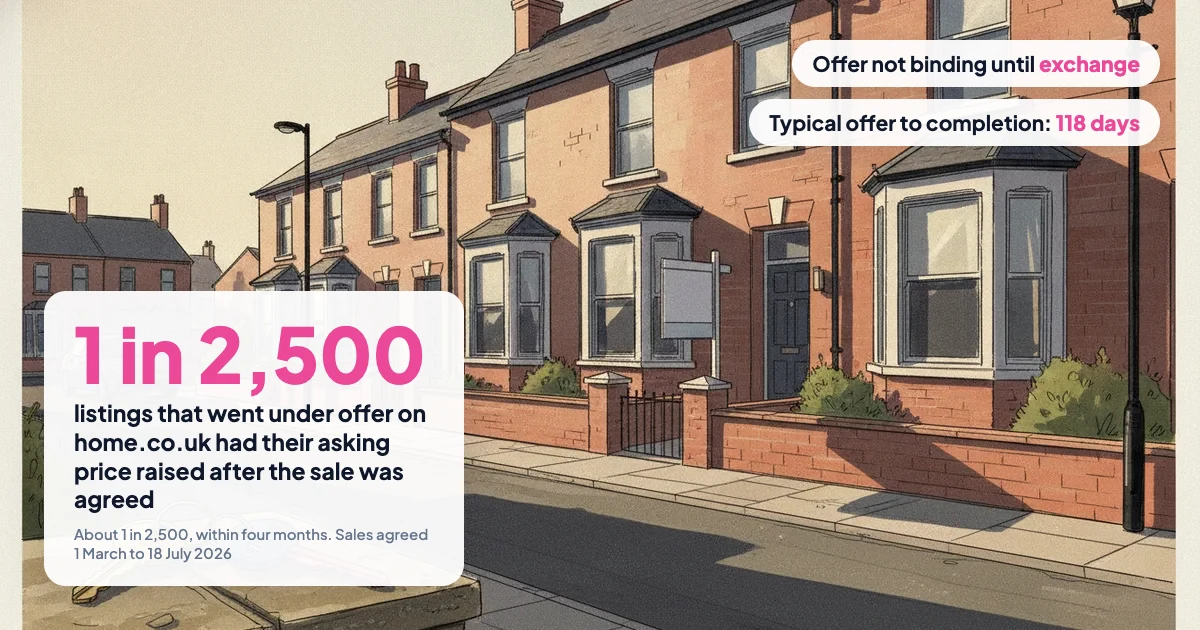
There's no official figure. On home.co.uk, about 1 in 2,500 listings that went under offer or sold STC between 1 March and 18 July 2026 had their asking price raised above what it was when the sale was agreed, within four months. That misses gazumping where the seller takes a higher offer from another buyer without changing the listing.
Sources
- Reservation agreements: informing the design of an effective offer. Ministry of Housing, Communities and Local Government. Accessed 16 November 2026.
- Buying a home: making an offer. UK Government. Accessed 16 November 2026.
- Code of Practice for Residential Estate Agents (TPOE27-9). The Property Ombudsman. Accessed 16 November 2026.
- The Estate Agents (Undesirable Practices) (No. 2) Order 1991, Schedule 3. legislation.gov.uk. Accessed 16 November 2026.
- Home buying and selling reform: consultation. Ministry of Housing, Communities and Local Government. Accessed 16 November 2026.
- Home buying and selling reform: roadmap. Ministry of Housing, Communities and Local Government. Accessed 16 November 2026.
- Making an offer (Scotland). mygov.scot. Accessed 16 November 2026.